By VDC staff
Concerned local residents packed a public information meeting Wednesday night to voice concerns about a proposed grid-scale battery energy storage facility planned for Panton Road in Vergennes, according to a report by News 5.
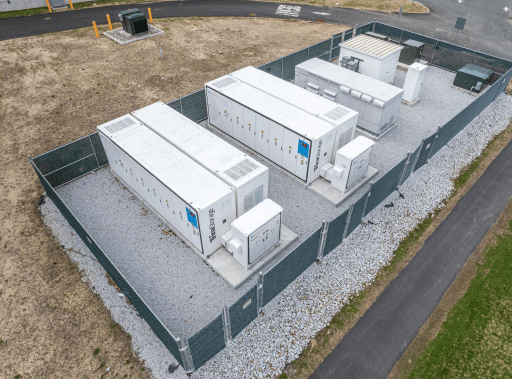
The 4.99 MW Battery Energy Storage System (BESS) will deliver backup power for four hours at peak output, according to a December, 2025 report to the Vermont Public Utilities Commission (PUC), the state’s regulatory and permitting body for most energy projects. The project, built by Lightshift Energy on private land, would expand battery storage capacity already present in nearby Panton.

The meeting was for informational purposes only because unlike most large development projects, energy generation and storage are not subject to either local review or Act 250 statewide review. Efforts to provide more municipal oversight were stymied by the Vermont Legislature this year when it extended for three more years the ‘sunset’ giving the PUC sole authority.
Critics say the PUC regulatory process is too complicated and expensive for municipalities, much less adjacent landowners, to effectively represent themselves.
Streamlined permitting is a necessary public good because battery storage will provide power during weather-related outages, while reducing Vermont’s impact on global climate change, Vermont’s leading energy utility said.
“Panton is the perfect place for this innovative work because it leverages GMP’s existing 4.9-megawatt solar facility with utility-scale batteries already up and running in the town.” a Green Mountain Power spokesperson said in a 2021 press release.
“It is heartbreaking to see the impacts of extreme weather across the country, and it’s a sad but important reminder that we must innovate to build resiliency to protect from extreme, unpredictable weather,” said Mari McClure, GMP’s president and CEO. “That’s why this project is so important. We are building solutions now that allow our cities and towns to stay connected and powered during outages. With microgrids powered by clean energy and paired with batteries to store and deploy that power when it’s needed, we’re keeping the power on for our customers, while also reducing our carbon impact.”

The Panton-Vergennes combined solar-battery project has won national attention, most of it positive in light of its promise to provide continuous flow of electricity sourced from intermittent solar power. Panton’s battery-backed up microgrid was featured on NOVA, a science program aired by PBS.
However, feedback from Panton neighbors was more focused on how the addition of more industrial-scale battery storage would affect their daily lives.
About 50 people attended the meeting, hosted by the City of Vergennes, where representatives from Lightshift Energy sought to explain the project’s benefits and answer questions from the public. The proposal drew significant opposition from attendees, many of whom questioned why the facility was being proposed near residential properties.
“We’ve listened to you. We’ve respected you. It’s time for us,” one resident told project representatives during the meeting.
Lightshift officials said the battery storage system would provide environmental and economic benefits by helping stabilize Vermont’s electric grid, reducing reliance on fossil fuels, and lowering long-term energy costs for ratepayers.
“Energy storage can manage solar and essentially make it more valuable,” Lightshift Energy representative Laura Coriell said, according to News 5. “We’re shifting solar energy from times of kind of low demand, low cost to higher demand, higher costs. And the more we can do that, the more local solar that we can build out throughout the state.”
Project officials said the proposed Panton Road site was selected because it is already zoned for industrial use and is well-suited to support the electrical infrastructure needed for the facility.
Residents, however, continued to question the location.
“My question is why did you pick adjacent to me?” one attendee asked. “Versus next to the solar field. Versus next to the high school.”
Other residents expressed concerns about the lithium-ion batteries catching on fire. The Vergennes Fire Department submitted this statement on June 3: “From where we sit, VFD has no safety objections to this project. Our operational familiarity with this corridor also informs our view that the risk profile here is consistent with, and in our judgment no greater than, other facilities already operating in close proximity to residential areas in this part of the city.”
It is unclear how the battery storage facility will impact ratepayers. Cost of construction and operation must be weighted with the underlying cost of intermittent power and savings realized when the battery power is reallocated during hours of more expensive peak demand.
Lightshift has two other Vermont projects planned for 2026, it said last October: a 16-megawatt project in Essex Junction, and a three MW project in Northfield.
The post Grid-scale battery storage skeptics show up at Vergennes meeting first appeared on Vermont Daily Chronicle.
The post Grid-scale battery storage skeptics show up at Vergennes meeting appeared first on Vermont Daily Chronicle.