How the Hurricane of 1938 devastated Vermont’s forests — and how the government tried to save them
by Timothy Page
On the evening of September 21, 1938, a hurricane unlike anything Vermont had ever seen came howling up the Connecticut River valley without warning. Winds of 75 miles per hour struck the Northeast Kingdom, toppling barns, silos, and sugar maples. As the storm pushed north, it destroyed apple orchards and maple sugar groves, especially on the hilltops, before crossing Lake Champlain near Burlington around 8 p.m. Even in the far north, the damage was considerable — soft ground from the rains derailed a Delaware & Hudson train in Castleton, and a falling elm tree struck the Playhouse Theatre in Montpelier.
By morning, the hills were unrecognizable. Farmers walked out to their woodlots and found chaos. One Vermont farmer, Bryce Metcalf, remembered it this way: “The next day, my father and I walked out there. It was just a jungle. You couldn’t get through it, so many trees were down. And the trees that were left standing had branches and limbs blown off so they never ran sap like they did previously. It pretty near ruined our sugar place.”

For thousands of Vermont farm families, that ruin was not merely emotional. It was financial.
A State Still Living Off the Land
Vermont in 1938 was different from the rest of New England in a crucial way. Farming had continued well into the 1930s, so only about half of the state was covered in forests. Hurricane damage fell mostly on woodlots on top of ridges and in the sugar maple orchards that produced the springtime crop of maple syrup. Those sugar orchards were not a sentimental luxury. Maple syrup was a hugely important crop in Vermont, because dairy farmers used the income from syrup to pay a year’s wages for hired help. With so many sugar orchards lying in ruins, many Vermont farmers had no choice but to get out of farming altogether.
The storm toppled an estimated third of Vermont’s sugar maples. Historian and author Steve Long, who spent years researching the storm’s legacy, put it plainly: “The rest of New England had turned to manufacturing, but so many communities in Vermont were still farming at that time. Any place there were sugar bushes and woodlots, chances are they were blown down. It was just one more nail in the coffin of Vermont agriculture.”
The loss fell on top of the Great Depression, which had already ground rural economies across the state to a near standstill. For families whose woodlot was a kind of living savings account — a place to cut a few trees and raise quick cash in desperate times — the hurricane had wiped out years of patient, careful stewardship in a single night.

Washington Steps In
The destruction was too vast and too urgent for any state to handle alone. The federal government formed the Northeastern Timber Salvage Administration, known as NETSA, to confront the downed timber. An agency administrator described the scope of the problem in terms that were almost impossible to absorb: the hurricane had “left wind-thrown timber in large and small bodies over some 15 million acres, or 35 percent of all the land area of New England,” with damage across 904 towns in 51 counties, striking the woodland bank accounts of 30,000 Depression-era landowners. All told, an estimated 2.6 billion board feet of timber had come down — and to put that in context, a typical truckload of logs holds just 6,600 board feet.
At the instigation of President Franklin D. Roosevelt, the United States Forest Service shipped teams of foresters from across the country into New England to assess the damage and help with recovery. Headquartered in Boston, these teams toured the devastated areas alongside state foresters and fire wardens, working out plans to salvage timber, reduce fire danger, and teach new firefighting skills to local crews. NETSA opened an office in Montpelier, placing Vermont directly within the network of the federal recovery operation.

The immediate danger was fire. All that downed wood — heaped in enormous tangles across Vermont’s hillsides and ridges — was bone dry and waiting for a spark. The U.S. Forest Service directed the WPA and CCC to strip the fallen trees of their branches, twigs, and needles to reduce the fire hazard, while simultaneously creating NETSA to purchase the salvageable logs. Crews began arriving in April 1939, working out of camps set up across the region, doing by hand what today a chainsaw would handle in minutes. The chainsaw wouldn’t reach the mass market for another decade.

Paying the Farmers Back
NETSA’s core mission was not just cleanup but compensation. The agency helped harvest, process, purchase, and store timber, and worked to set stable timber prices — all to minimize the losses suffered by affected landowners. The $15 million loan that established NETSA was secured by mortgages on all the timber it would purchase, to be repaid from subsequent resale of the logs.
Ultimately, NETSA paid $8.3 million to 13,000 landowners, mostly farmers, for timber damaged by the hurricane. The agency created a market for the logs and purchased nearly half of the salvageable timber, providing some income to the 30,000 families that otherwise would have lost their woodland bank accounts entirely. By 1941, NETSA had salvaged over 700 million board feet of timber — a staggering logistical achievement carried out largely by hand, in the depths of a Depression that had left little market for the wood. What the domestic economy couldn’t absorb, World War II eventually did, as wartime demand for lumber consumed what remained in storage.
As Long noted, there was a bittersweet irony to the cleanup effort: “If there was any silver lining, all the cleanup and wood processing and repairs to houses and buildings put people back to work.”
A Forest Transformed
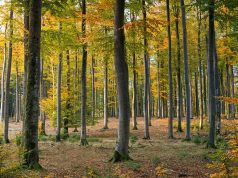
Vermont’s forests did not come back the same way they had been before. The regrowth of the forest in Vermont began some 80 years later than in Massachusetts and New Hampshire, and it unfolded differently because Vermont’s soils are richer than those of its neighbors. Where white pines and conifers had once crowded the hillsides, the storm had cleared the way for something older and arguably more beautiful. When the towering canopy of pine blew down, what was left were the seedlings and saplings of deciduous hardwood trees — and the mix of maple, birch, and oak that relished the new sunlight grew vigorously. This new forest closely approximates the species mix of the original forest that had greeted the first settlers.
Vermont’s forest cover has now reached 80 percent, and the vast majority of it is the mix of northern hardwoods — maple, beech, and birch — that makes the hills come alive in the fall. Every autumn, the hillsides of Vermont blaze with color that draws visitors from around the world. Few of those leaf peepers know they are looking at a forest that was, in large part, born from catastrophe — and saved, at least in part, by one of the most ambitious government forestry programs the country has ever attempted.
The post The night a million trees came down in Vermont first appeared on Vermont Daily Chronicle.
The post The night a million trees came down in Vermont appeared first on Vermont Daily Chronicle.