Can the Bible be funny?
It’s one of those questions Christians love to debate, and it was on my mind as I sat down to watch The Promised Land, a situation comedy in which the situation is ancient Israel’s 40 years of wandering in the wilderness.
The series (free to watch on YouTube) is filmed as a mockumentary. It’s a comedic format that proved successful for The Office and Parks and Recreation, but one that has high potential for blasphemy when applied to the Bible. And in my history of viewing Christian films and series, quality has sometimes been lacking. So as I pushed play on The Promised Land, I adjusted my expectations accordingly.
I didn’t expect it to be good, and I didn’t expect it to be funny. It turned out to be both.
Sinai in the Style of Dunder Mifflin
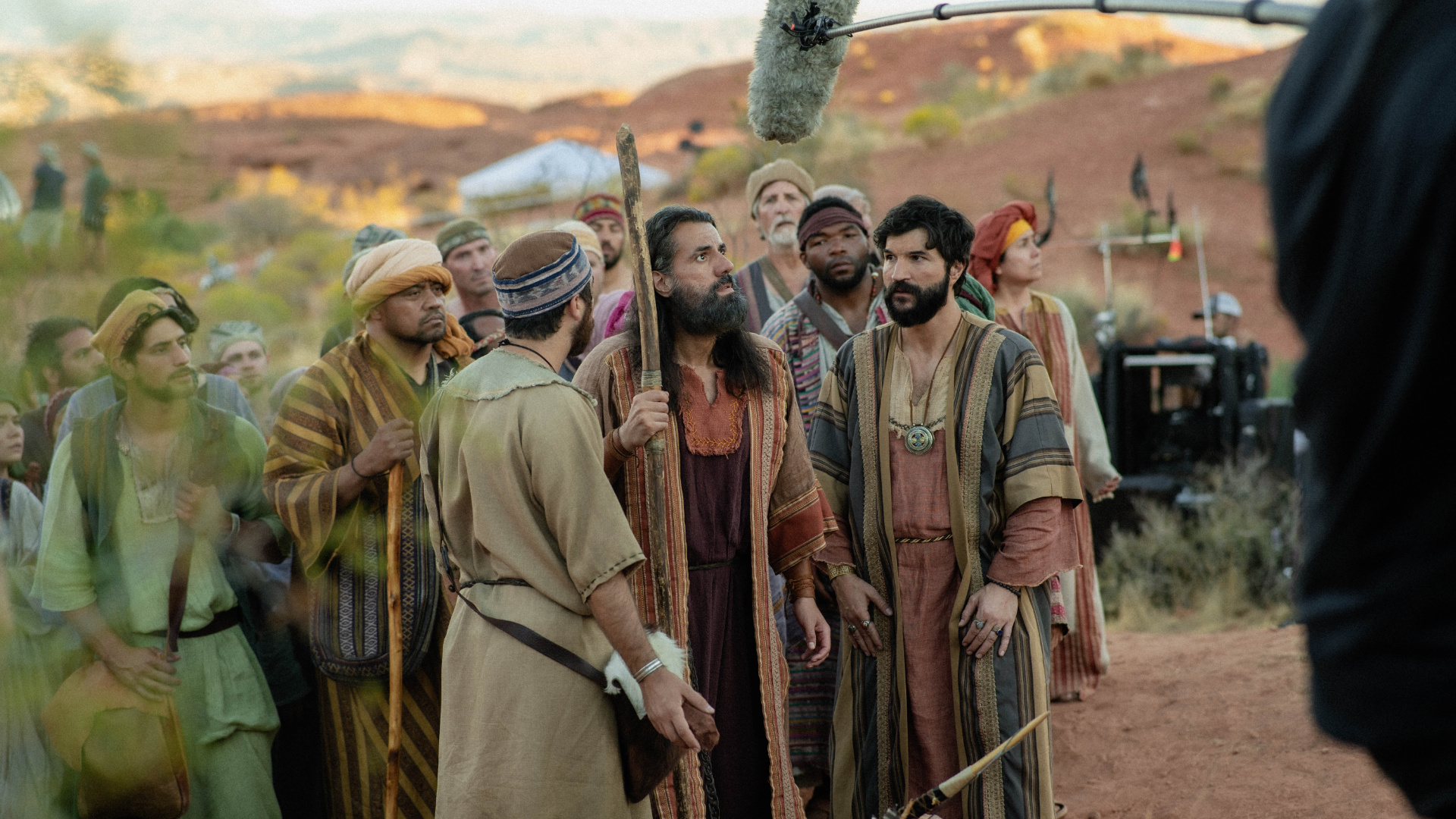
The Promised Land is the brainchild of writer-director Mitch Hudson and producer Richie Johns, both of whom have served on the crew of The Chosen. But while The Chosen plumbs dramatic depths, The Promised Land makes few attempts to take itself seriously. This is the story of Moses (Wasim No’mani) attempting to lead the people of Israel out of slavery and into the freedom of a barren Sinai Peninsula, all while receiving the sacred commands of God that will form their new religion.
Anyone who has read the Old Testament narratives of Israel’s wanderings can likely see the opportunity for humor. Moses’s struggles with the grumbling Israelites have high comedic potential, as do his relationships with long-lost brother Aaron (Majed Sayess) and sister Miriam (Shereen Khan). “Back in Egypt, I think some people were really beginning to recognize me for my talent,” Miriam tells us, “but the baby my mother pushed down a river became a political revolutionary, so now I get to take notes while the men are talking.”
I didn’t expect it to be good, and I didn’t expect it to be funny. It turned out to be both.
The arrival of Moses’s wife Zipporah (Tryphena Wade) leaves him with some explaining to do. “I’ve barely seen her since she threw my firstborn’s foreskin on my foot and called me a ‘bridegroom of blood,’ so we’ve got a lot to catch up on,” he admits.
We see how the Israelites struggle to trust this God whose name they’ve only just learned while adjusting to a stressful existence practically designed for interpersonal conflict. “Most of the time I’m thinking, ‘Yes, we’re going to make it to the promised land, 100 percent!’” Aaron says. “I have seen the impossible become possible. But sometimes I get this sinking feeling, no matter how hard I fight it, that we’re going to die in this desert.”
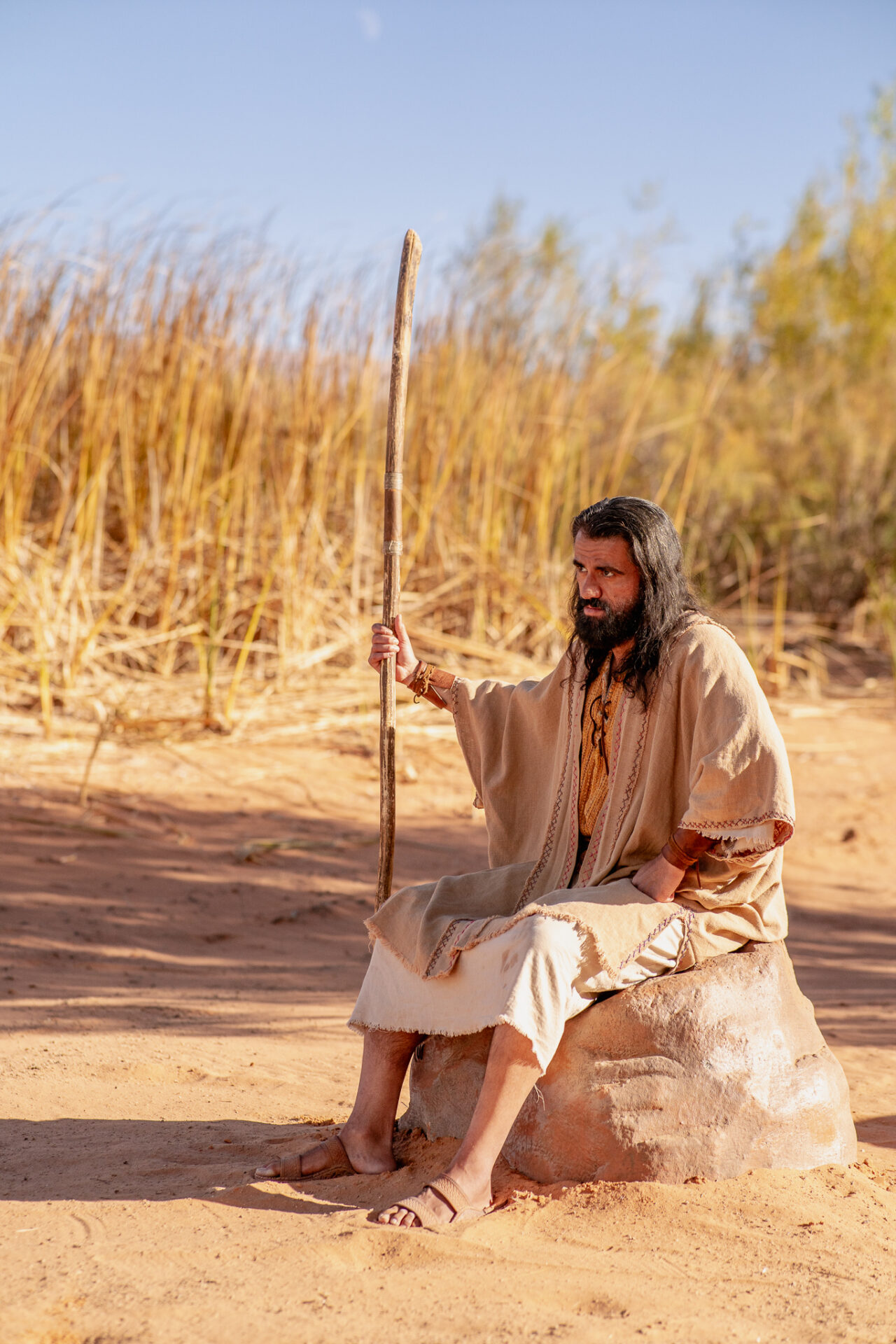
We also meet an Israelite named Korah (Brad Culver)—immediately billed as “Rightful Leader of Israel (Self-Proclaimed)”—and follow his efforts to gain a more prominent role among his people, even as he attempts to sniff out the origins of Chisisi (Dav Coretti), who we learn in a cutaway interview is actually an Egyptian soldier who washed up on the wrong side of the Red Sea. Chisisi’s outsider perspective allows him to make humorous observations. “That’s not their God. They know that, right?” he remarks on seeing the golden calf. Then there’s the overeager Joshua (Artoun Nazareth), desperate to become Moses’s right-hand man, the Sinai equivalent of assistant (to the) regional manager.
As the series proceeds through the six episodes of season 1, we come to know these characters in the intensity of their flaws and the heights of their character. Moses is a poor public speaker with no idea how to lead a nation through the desert. Aaron’s charisma cannot save him from a massive mistake (think of something gold that goes “Moo!”). Miriam struggles to find meaning in her female-specific tasks, Joshua has some maturing to do, and Chisisi just wants to go home. Amid all the chaos, the characters come to know the God who saved them, and it helps them relate to each other.
“We’re all going to make mistakes. God knows that,” Moses says in one particularly poignant moment. “It’s not about being worthy. It’s about being faithful to him. We are faithful when we recognize our need for him.”
Delicate Balance in Adapting the Bible
In transferring a biblical story to the screen, filmmakers must consider how closely they should stick to the biblical text. Too close and the story lacks necessary character arcs and situational context, but too far and viewers will no longer recognize the biblical characters. The best solution is to maintain the Bible’s theological content while adding secondary elements to make the depiction well rounded.
The Promised Land strikes this delicate balance. The show is willing to occasionally sacrifice historical accuracy for a joke, as when Joshua attempts to throw himself a birthday party or when Chisisi recalls his time performing with an Egyptian boy band. But I never felt the biblical text was being dishonored.
Genuinely Funny—and Moving
The Promised Land isn’t worth watching simply because it’s Christian. It’s worth watching because it’s good.
The Promised Land isn’t worth watching simply because it’s Christian. It’s worth watching because it’s good.
The actors understand comedic timing. The writing weaves together subplots effectively. Crucially, I laughed aloud on occasion, which is a rare occurrence. The humor kept me engaged, and I connected with the characters.
When Moses and Aaron fall out over the golden-calf incident, I could sense how horrific this conflict must have been for the biblical characters. When Aaron is subsequently restored and takes his place as high priest in the tabernacle, I was genuinely moved.
A second season of The Promised Land is already being produced, so I look forward to more time with a show that far exceeded my minimal expectations and made me believe that the Bible can, in fact, be funny.